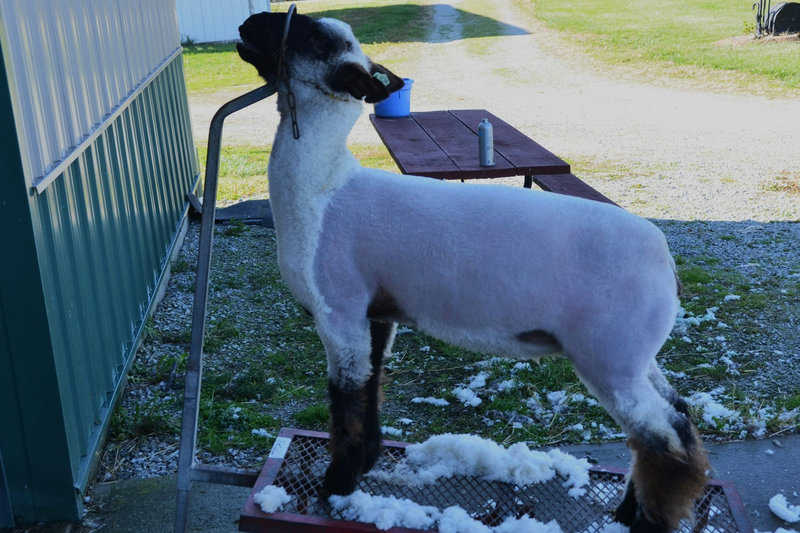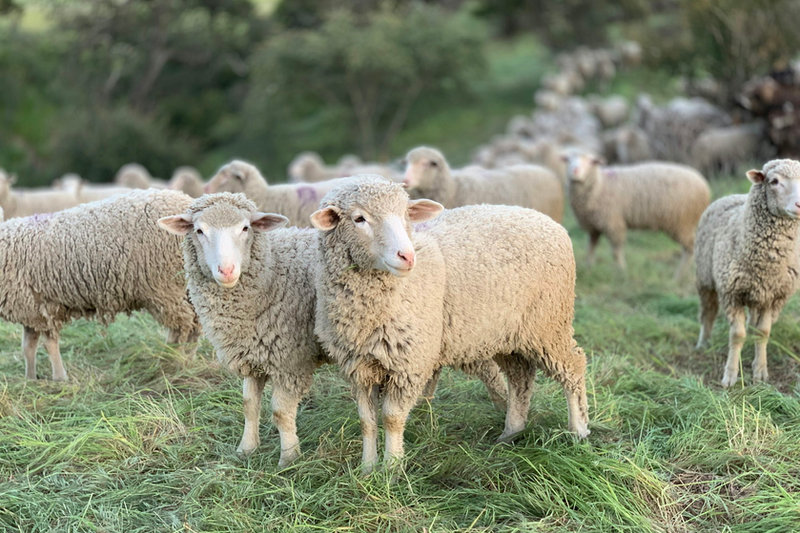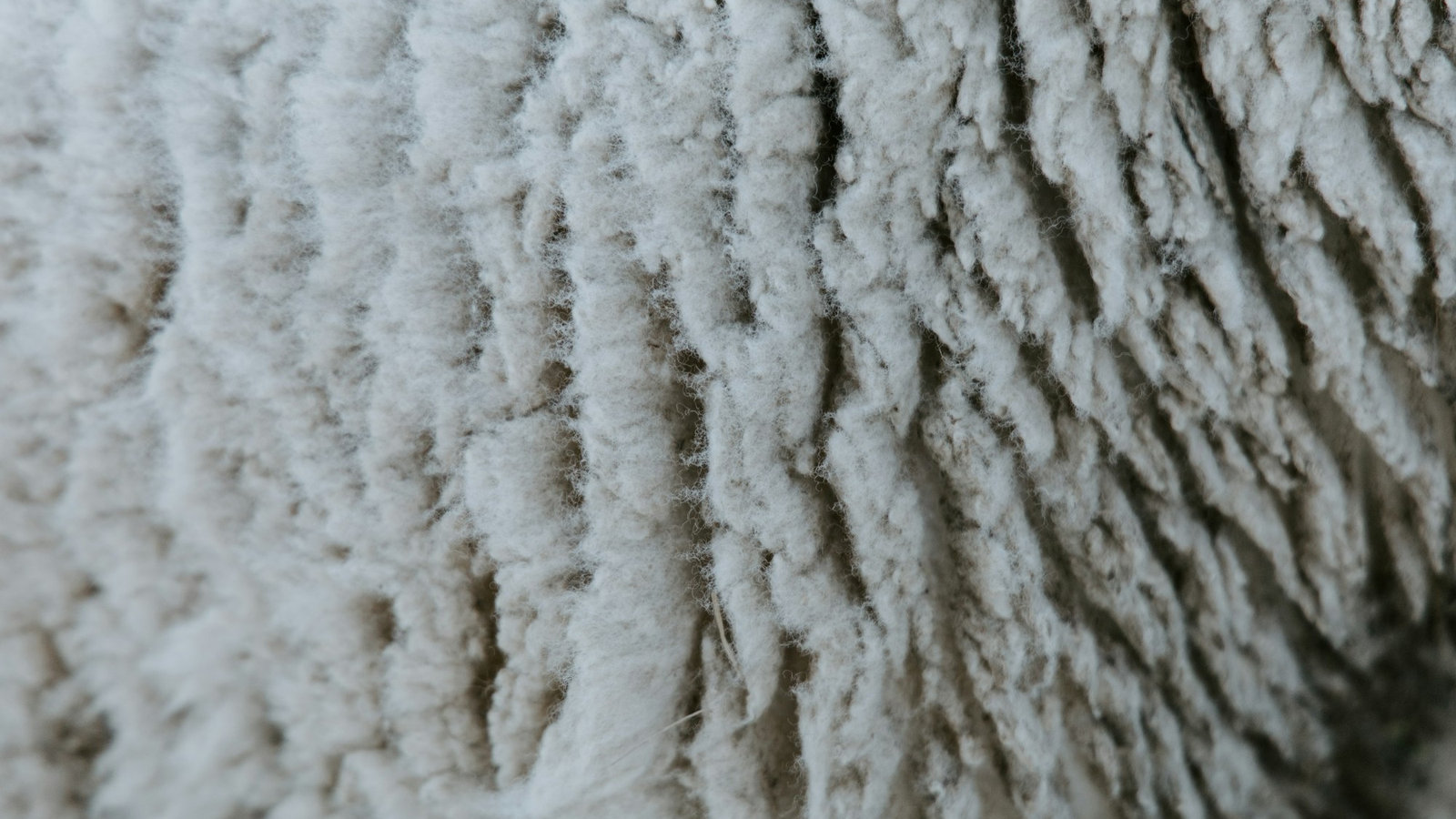
Sheep wool has been with us for thousands of years – and despite all the modern high-tech fibres, it is still popular today. There are good reasons for that. The wool fibre naturally has properties that are very hard to imitate artificially. But what exactly makes sheep wool so special? Let's take a really close look at the fibre.
A look inside the fibre
Under the microscope, a wool fibre looks very different from a smooth synthetic fibre. It consists mainly of keratin, a protein that is also found in human hair. Its surface is covered with fine scales that overlap like roof tiles. Inside, the fibre has a complex structure and can absorb moisture.
Its crimp is particularly characteristic: wool fibres are naturally wavy. This crimp creates countless tiny air pockets between the fibres – and that is the secret behind many of wool's properties.
Warming and cooling – as needed
Still air is an excellent insulator. The many air cushions between the crimped fibres hold on to body heat. That is why wool socks feel so pleasantly warm on cool days.
At the same time, wool is breathable. It lets excess heat and moisture escape. That is why good wool products are comfortable to wear not only in winter but also in spring and autumn and on milder days. Wool works like a natural air-conditioning system that adapts to your body.
A master of moisture management
One of its most astonishing properties: wool can absorb a considerable part of its own weight in moisture – a figure of around a third is often quoted – without feeling wet. The moisture is stored inside the fibre, while the surface remains rather water-repellent.
For socks in particular, that is a big advantage. Our feet sweat more than many people think. Wool absorbs this moisture and gradually releases it back into the air. This keeps the climate around your feet pleasantly dry – whether you are out and about all day or making yourself comfortable on the sofa.
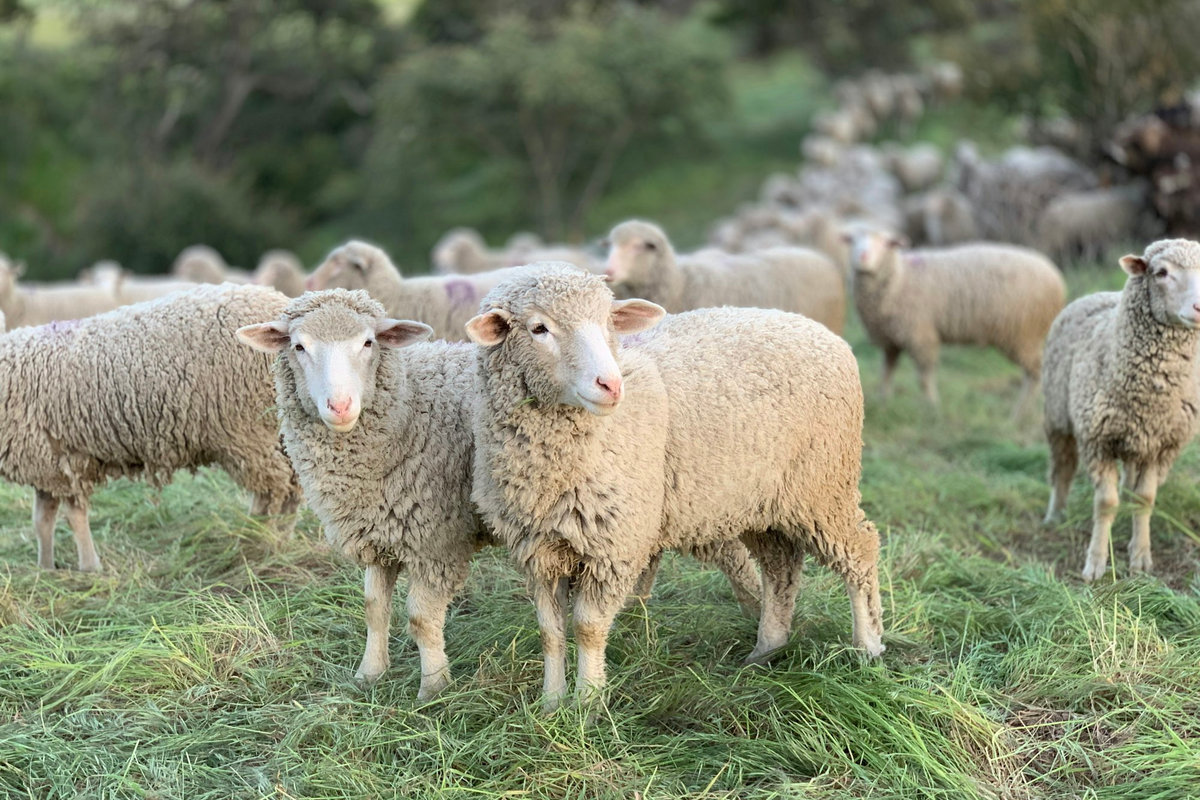
Naturally odour-resistant
Anyone who has worn wool socks knows this effect: they often smell much less quickly than socks made purely from synthetic fibres. One reason is that wool regulates moisture well and can bind odour molecules in the fibre. Bacteria responsible for unpleasant smells therefore find poorer conditions.
With jumpers or jackets, simply airing them outdoors is often enough. That is not only kind to your clothes, but also saves water and energy.
Elastic and shape-retaining
The crimped structure also makes wool very elastic. A wool fibre can be stretched and then returns to its original shape. It can also bend many times without breaking. For socks, this means they adapt to your foot, fit comfortably and keep their shape even after many days of wear.
Dirt-repellent and naturally flame-resistant
A trace of natural wool grease and the scaly surface make it harder for dirt to penetrate the fibre. Many stains can therefore be brushed out or carefully washed out.
And one more property you would hardly expect: wool is naturally flame-resistant. It does not burn as easily as many other fibres, does not melt and tends to extinguish itself. It is no coincidence that wool is also prized for carpets and upholstery fabrics.
Soft or scratchy? A question of fibre
Many people associate wool with scratchy jumpers from their childhood. Whether wool feels soft or rough depends above all on the fineness of the fibre and how it is processed. Fine fibres bend away when touched, while coarser fibres can prickle sensitive skin. Thoughtful craftsmanship – such as an especially fluffy inside – makes sure wool socks feel wonderfully soft.
A little care is all it takes
Wool needs very little attention to keep its properties for a long time. The fine scales on the fibre surface are the reason wool can felt at high temperatures and with a lot of friction. So it is best to wash wool products on a wool cycle or by hand, at a low temperature and with a mild wool detergent. Then leave them to dry flat in the air – the tumble dryer is off limits for wool. Often it is enough simply to air your clothes. With this little routine the fibre stays soft, elastic and keeps its shape.
It's the combination that counts
What is truly special about sheep wool is not a single property but the way they all work together: it warms and cools, absorbs moisture, resists odours, is elastic and durable – and it is a renewable raw material too. This combination makes wool one of the most versatile fibres there is.
No wonder people have relied on wool for generations – for warm feet in winter, a pleasant foot climate in spring and autumn and a wonderfully cosy feeling on every day of the year.