Socks are such a natural part of our everyday lives today that we hardly give them a thought. Yet they have a long and fascinating history – and wool has played a leading role in it from the very beginning. Let's take a little journey back in time to the origins of the wool sock.
The beginnings: animal hair and felt
From early on, people looked for ways to protect their feet from cold, wet and chafing. The first “socks” had little in common with the stockings we know today. People probably wrapped animal skins, leather or plant fibres around their feet and tied them in place.
It is recorded that in ancient Greece people wore footwear made from felted animal hair, known as “piloi”. As early as around 700 BC, the poet Hesiod mentioned that these felt shoes could be placed inside shoes in winter. Felt is created when wool fibres hook together through heat, moisture and friction – one of the oldest textile techniques of all.
The Romans and their udones
The Romans also knew footwear worn under their sandals. At first they wrapped strips of leather or woven fabric around their feet. Later came the “udones”, a kind of sewn sock made of fabric or felt. Such warming foot coverings were particularly welcome in the colder provinces of the empire – such as present-day Britain.
The oldest surviving socks
Among the oldest surviving socks in the world are finds from late antique Egypt, dated to roughly the third to fifth centuries AD. They are made of wool, are often colourful and have one special feature: a separate big toe. This meant they could be worn with sandals.
These socks were not knitted in the modern sense but made using a technique called nålbinding – an old method in which loops are formed with a single needle. We owe the fact that they have survived to this day to the dry desert climate.
The Middle Ages: knitting spreads
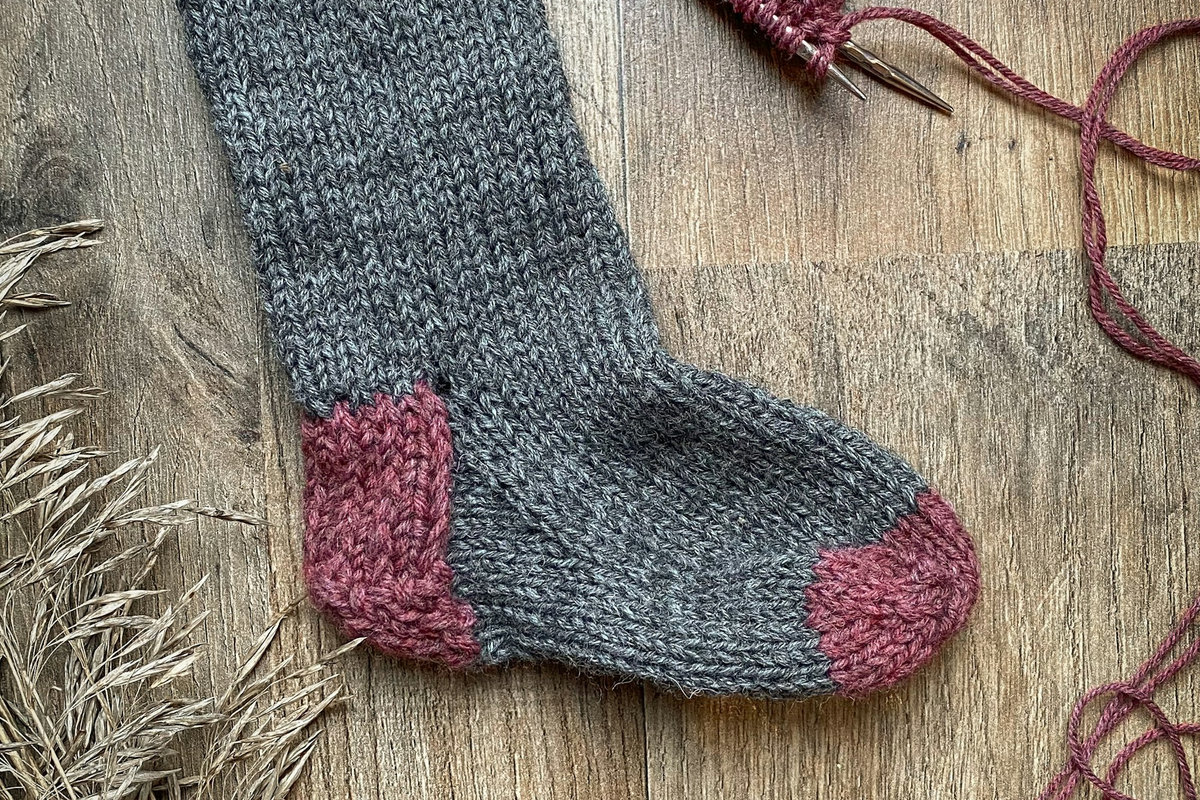
During the Middle Ages, knitting with several needles spread across Europe. Stockings became an important garment – and a sign of wealth. Fine, close-fitting stockings were worn mainly by the well-off, while ordinary people made do with coarser woollen stockings or foot cloths.
In many regions a real knitting culture developed. Whole families knitted stockings at home to supplement their income. Wool was the material of choice: it was available, reliably warm and easy to work with.
The knitting machine changes everything
A turning point came in 1589: the English clergyman William Lee invented the stocking frame, an early knitting machine. It made it possible to produce stockings much faster than by hand. Although it took some time for the technology to catch on, it laid the foundations for industrial stocking production.
With industrialisation in the 18th and 19th centuries, socks became affordable for more and more people. Wool long remained the most important material – until cotton and eventually synthetic fibres such as nylon joined it in the 20th century.
Wool socks in hard times
Just how important warm wool socks are became particularly clear in times of war. During both world wars, many people at home knitted socks for soldiers. Dry, warm feet could make all the difference to health in the trenches. Wool was unbeatable here, because it still keeps you warm when it is damp.
Regional traditions
Many regions of Europe developed their own sock traditions. In Scandinavia, the British Isles and the Alps, typical patterns and knitting styles emerged and were passed down from generation to generation. Thick, sturdy wool socks were part of the kit of farmers, shepherds and fishermen who worked outdoors in all weathers. In the Alps, wool stockings are still an essential part of traditional dress today. Many of these patterns and techniques are still kept alive – often lovingly by hand.
Why wool still wins people over
Today socks are made from countless materials. And yet many people keep coming back to wool. The reason is simple: the advantages that the ancient Greeks and Romans appreciated still hold true today. Wool keeps you warm, regulates moisture, is elastic and long-lasting.
On top of that, there is a new awareness of natural materials and clothing that lasts. A well-made wool sock is not a throwaway product but a piece of craft tradition you can feel every day.
A little piece of history on your feet
So the next time you slip into a pair of wool socks, you are wearing a little piece of cultural history. From the felted foot warmers of antiquity and the colourful socks of Egypt to the knitting rooms of past centuries: the wool sock has come a long way. And one thing is certain – its story is far from over.